
vWhy Live French Roulette Might Appeal to Poker Players Between Sessions
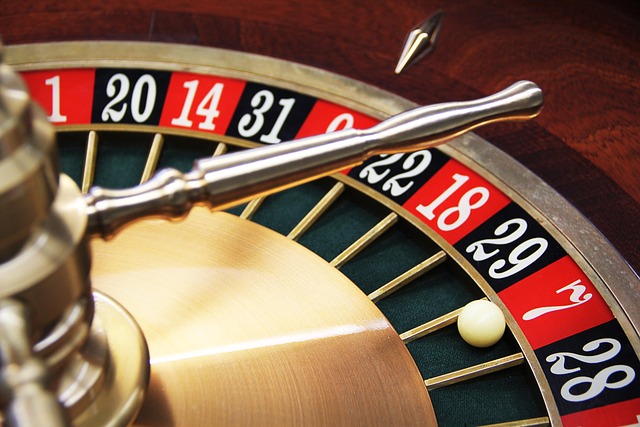
Most poker players spend some time at casino tables between poker sessions. Sitting out a bad-run stretch or a tournament dinner break, the casino floor or an online lobby is often the closest available entertainment. But most casino games treat a poker player badly, offering house edges unthinkable at a poker table where the whole point is playing an equal-EV game against opponents rather than a losing-EV game against a house.
One casino format is a partial exception. Live French roulette combines the lowest house edge in the standard random-outcome category (1.35 percent on even-money bets under the La Partage rule) with the human element that most poker players value about live poker. It is not a poker substitute, because the mathematics is completely different, but as a between-session entertainment option it fits the poker player's mental frame better than most alternatives.
What follows walks through what makes live French roulette distinctive from a poker player's analytical perspective. It covers why the La Partage rule matters, what the live dealer element adds, how the format sits alongside a poker bankroll, and where the reasonable limitations are.
The House Edge Comparison That Actually Matters
A poker player evaluating casino games mostly cares about the house edge. Not because the game becomes beatable at low edges, but because the expected cost of playing translates directly into how much can be lost per hour of entertainment, which is a bankroll question with a numerical answer.
The standard casino house edges are well established. American roulette carries 5.26 percent, European roulette 2.70 percent, French roulette with La Partage 1.35 percent on even-money bets, baccarat banker bet 1.06 percent. Blackjack under basic strategy runs 0.5 percent or so depending on the rule set, and craps pass line with maximum odds can drop below 0.5 percent, though the effective edge on total wagered rises quickly with side bets.
French roulette therefore sits at the low-edge end of the random-outcome games. Blackjack under basic strategy is lower, but requires the player to execute basic strategy correctly, which most poker players will pick up quickly but which does introduce a skill-execution dimension. For a purely random-outcome game with no execution component, French roulette on even-money bets is close to the mathematical floor.
La Partage: The Rule That Makes the Math Work
La Partage is a rule that applies to even-money bets in French roulette. When the ball lands on the single zero pocket, a losing red/black, odd/even, or high/low bet returns half the stake to the player rather than being lost in full. On any spin landing on a numbered pocket, even-money bets settle normally.
The mathematical effect is that the house edge on those bet types drops from 2.70 percent (the standard European figure with the same 37-pocket wheel) to exactly 1.35 percent, or half. The Wizard of Odds analysis of French roulette documents the calculation and notes that the closely related En Prison rule, less common online, produces the same expected value through a different mechanism.
The important caveat for a poker player used to thinking in bet-type EV is that La Partage does not apply to inside bets. A straight-up number, a split, a corner, a line all retain the 2.70 percent European house edge. The 1.35 percent figure is only for red/black, odd/even, and high/low, which narrows the practical strategic space to those three bet types if the low edge is the reason for choosing the variant.
What the Live Dealer Element Adds
The live dealer format matters more to poker players than to casual casino visitors. Poker players are used to reading humans as part of the game. A live dealer roulette table offers no information the player can act on (the wheel is genuinely random and the dealer is not making decisions that affect outcomes), but the human presence changes session texture in ways that resemble live poker rather than software gambling.
The live French roulette at UK-facing operators typically runs on Evolution Gaming's stack from studios in Latvia. Dealers speak French or French-accented English, the wheel is the standard 37-pocket single-zero, and La Partage applies to all even-money bets. Session pacing sits around 30 to 40 spins per hour, close to a live blackjack table and much slower than software roulette.
The slower pace matters mathematically. At 30 spins per hour with a £10 even-money bet, expected loss is 30 × £10 × 1.35% = £4.05 per hour, whereas software French roulette at 200 spins per hour with the same stakes pushes expected loss to £27 per hour despite the identical house edge. For a poker player thinking in bankroll-per-hour terms, the format speed does more of the work than the house edge percentage alone.
How This Sits in a Poker Player's Bankroll
Poker bankroll thinking is variance-first. Build a bankroll large enough to absorb typical downswings at the stakes played, size individual sessions as a small fraction of the total, and treat downswings as inevitable. That framework transfers cleanly to casino play with one adjustment: casino play has fixed negative expected value where poker played well against beatable opposition has positive expected value.
The practical implication: a poker player treating live French roulette as between-session entertainment should size it as an entertainment expense rather than edge play. A defined session budget, a stake level producing an enjoyable per-hour cost, and a hard stop when the budget is spent together produce a format that behaves like paying for entertainment rather than losing at gambling.
The mathematics of the expected cost are legible enough that a poker player can budget precisely. At £5 stakes on even-money bets at a live table, an hour costs around £2 in expected loss; at £25 stakes, around £10; at £100 stakes, around £41. These are averages over long-run play, and individual sessions can lose or win multiples of the expected amount, which is the variance dimension every poker player already understands intuitively.
What the Format Does Not Give You
Live French roulette is not poker, and reading it through a poker frame produces a clear-eyed view of what the format cannot offer. There is no skill dimension since no strategy choice affects the wheel's mathematics, and no player-versus-player element, so the social atmosphere is casual rather than competitive. There is no long-term edge either, only a low-edge cost that accrues predictably with volume.
The decision framework above lays out where the format actually fits. For a poker player who wants a game they can beat, the answer is to play more poker. For a poker player who wants casual low-edge entertainment between poker sessions, live French roulette is a reasonable choice, with blackjack under basic strategy as the main alternative for anyone willing to learn a decision framework rather than just placing red/black bets.
The format's genuine appeal to a poker audience is the combination of low mathematical cost, live human presence, and clear-eyed knowability of the expected outcome per hour of play. That does not make it a poker substitute. It makes it a form of entertainment that fits the poker player's analytical habits better than most casino alternatives, and that is worth understanding on its own terms.