
Video Poker vs Pai Gow Poker Explained Through Player Decisions
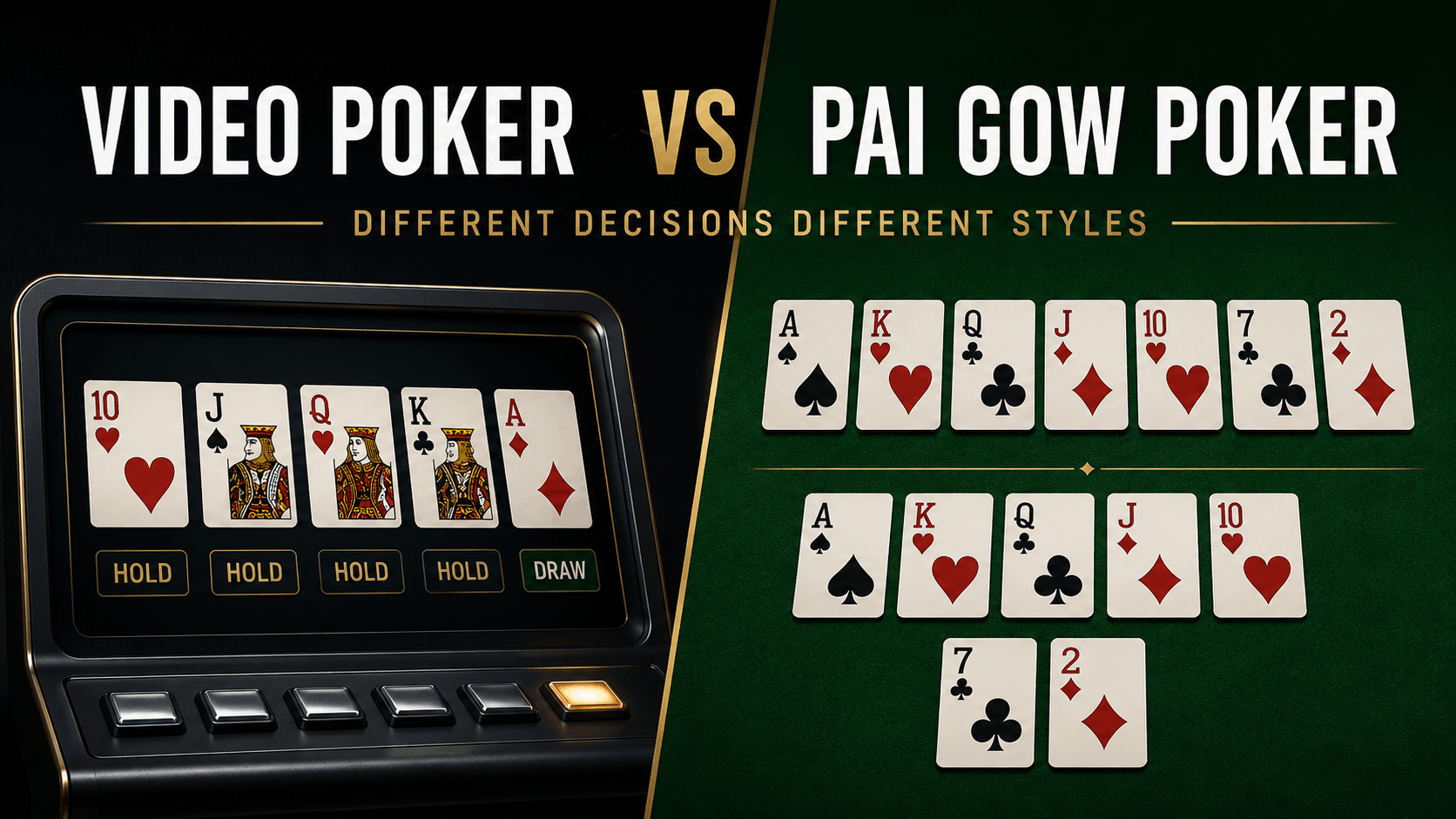
Video poker and Pai Gow poker share familiar hand rankings, but they are very different games, and they train different instincts. One asks which cards deserve to stay. The other asks how 7 cards should become 2 separate hands. That shift changes the whole reading experience, especially for newer players who know pairs and flushes but lack a deep understanding of the games.
That difference is easier to understand through decision shape. A 2024 review of cognitive flexibility describes the mind’s ability to adjust thinking and behavior when the context changes. These two games make that visible. The rankings stay familiar, but the useful question changes in practice.
Two Formats, Two Decision Shapes
In video poker, the hand begins with 5 cards, and the central decision is what to hold before the draw. To see that structure in a real entertainment setting, players can play selections of video poker online games through a poker page featuring recognizable titles such as Jacks or Better, Joker Poker, Aces and Faces Multi-Hand, Double Double Bonus Poker, Lucky Video Poker, and Tens or Better Multi-Hand.
The value for learning is the clean sequence: receive 5 cards, keep the cards that support the strongest final hand, replace the rest, then read the result. A pair may become the natural foundation. Four suited cards may point toward a flush. A single high card may matter when nothing else connects. Once that rhythm is clear, playing video poker online becomes a straightforward way to notice how the first choice shapes what the final hand can become.
Pai Gow requires a very different approach, because the player is not choosing cards to discard. The puzzle here lies in figuring out how to arrange 7 cards into 2 valid hands.
That is why this short Pai Gow Poker knowledge check follows naturally after video poker’s hold-or-draw idea. It shows the other decision style in quick form: 7 cards are split into a 5-card hand and a 2-card hand, the 5-card hand must outrank the 2-card hand, both player hands are compared with the dealer, and 1 successful comparison results in a push. It also notes that the Joker works as an ace or completes a straight or flush.
Why Video Poker Feels Immediate
Video poker feels immediate because the player is dealing with one visible hand and one clear turning point. There is no need to read table position or balance 2 hands. The player studies 5 cards and chooses what stays.
That does not make the decision empty. It makes the decision cleaner. A beginner can look at a starting hand and ask a few practical questions. Is there already a made pair? Is there a strong draw? Are the cards connected, suited, or scattered? The format encourages pattern recognition, but in a compact way. You are not building a story about other players. You are reading the hand in front of you.
Multi-hand versions add another layer without changing the heart of the format. The first hold decision can play out across several hands, which makes the opening choice feel more visible. However, the decision still starts from the same place: what should remain before the draw?
Why Pai Gow Feels Slower But More Layered
Pai Gow poker creates a different type of focus. Since the player receives 7 cards and sets 2 hands, the best 5-card hand is not always the whole story. The 2-card hand also matters, so the decision becomes a balance between strength and structure.
That is where beginners often feel the contrast. In video poker, keeping a pair can be a clean, single-hand choice. In Pai Gow, a pair might belong in the 5-card hand, but the rest of the cards still need to support the 2-card hand. With 2 pairs or a possible straight or flush, the player is not simply asking, “What is my best hand?” They are figuring out, “How should the deal be divided?”
The Best Comparison Is Attention
The cleanest comparison is thinking about where your attention goes.
Video poker points attention toward selection. Which cards should stay? What draw path fits? How does the final 5-card hand change after that one choice?
Pai Gow points attention toward arrangement. Which cards belong together? How strong should the front hand be? How can the back hand stay stronger while the smaller hand still has shape?
That is the useful takeaway for lifestyle players and beginners. Both formats can feel relaxed and approachable because they use familiar poker hand rankings. Still, each rewards a different way of looking. Video poker teaches card retention. Pai Gow teaches hand balance.
Understanding that distinction makes both formats easier to enjoy because the player knows what kind of decision the game is asking for. It also mirrors a wider memory principle: good decisions often depend on holding the relevant pieces in mind for long enough to compare them, a point supported by open-access research on working memory from psychological and neuroscience perspectives.